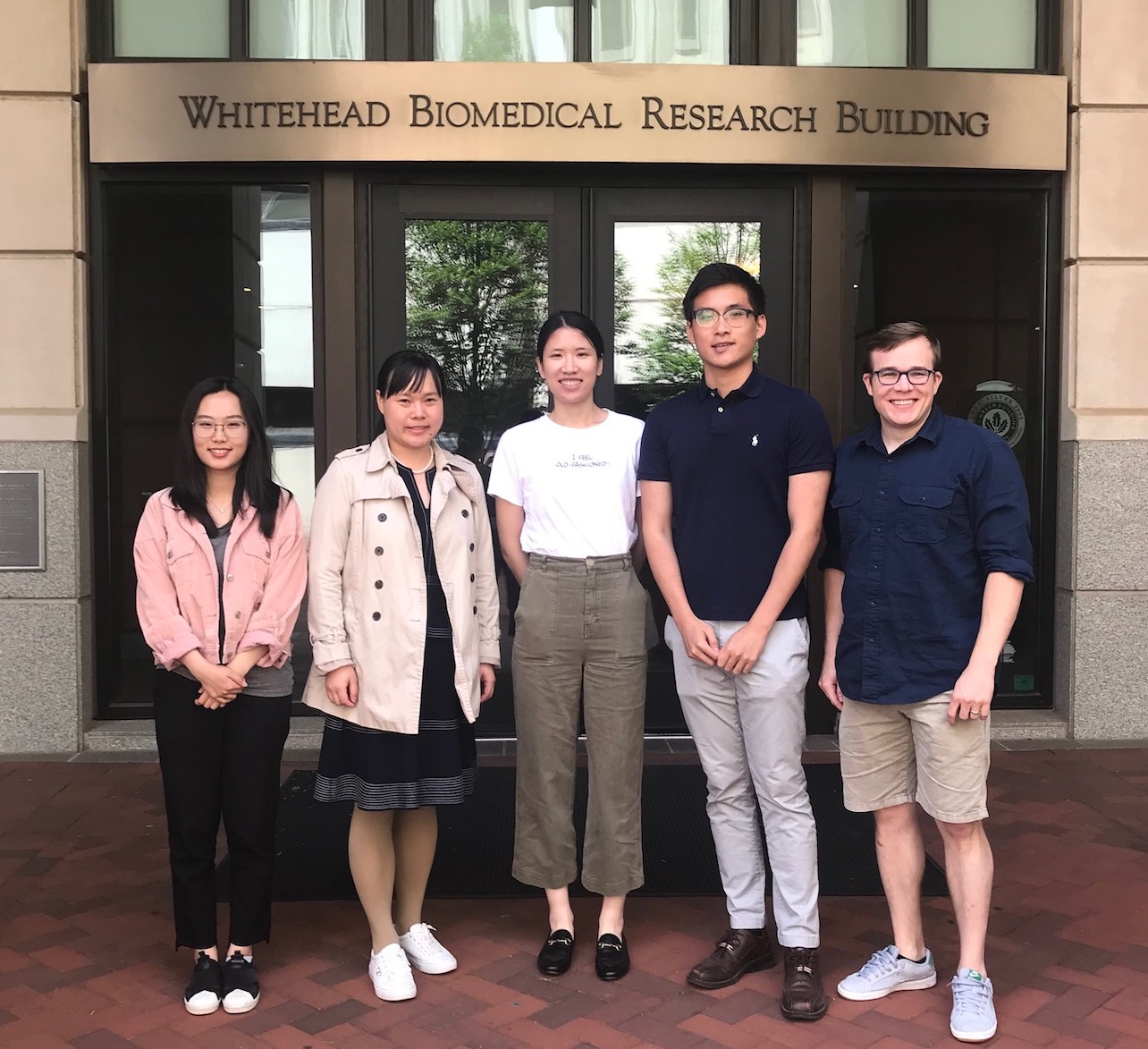
Lab members
Current Lab Members (updated June 2025)
| Name | Research Topics | Years in Lab |
|---|---|---|
| Randy Parrish Biostat PhD Student |
Applying Bayesian genome-wide method to PWAS and develop TIGAR in R library. | 2022-Present |
| Leo Liu Biostat PhD Student |
Integrating multi-omics with GWAS summary stat. | 2025-Present |
| Ruilong Chen Biostat PhD Student |
Studying omics data by tensor regression model. | 2026-Present |
| Peng Zhang Biostat MS Student |
TWAS of PD using reference transcriptomics data of multiple tissues. | 2025-Present |
| Lauren Ngo Biostat MS Student |
Predicting AD traits using deep learning model. | 2025-Present |
| Siyang Shen Research Specialist (Former Biostat MS Student) |
Predicting the risk of developing breast cancer using machine learning models and Bioinformatics analysis. | 2025-Present |
| Molly Murphy DDS Undergraduate Student |
Single cell eQTL studies. | 2025-Present |
Lab Onboarding Guidelines
Lab Alumni
-
Arpit Ramani (Highschool Intern, 2024-2026), BGW-TWAS/PWAS study of AD dementia. College student at Georgia Institute of Techonology.
-
Conglin Bao (Biostat MS Student, 2024-2026), Develop novel LSTM-RNN model for predicting AD pathology from longitudinal clinic data. PhD student at South Carolina University.
-
Bo Shen (Biostat MS Student, 2024-2026), Develop novel TWAS method for correcting bias in using machine-learning imputed gene expressions. PhD student at Westlake University.
-
Shizhen Tang (Biostat PhD Student, 2021-2026), Integrating spatial transcriptomics data with snRNAseq data for differntial gene expression analysis. Research Faculty at Department of Statistics, Radiation Effects Research Foundation, Hiroshima, Japan.
-
Qile Dai (Biostat PhD Student, 2020-2025), TWAS using summary-level QTL data and Cell-cell Communication. Advisor Statistician at Eli Lilly.
-
Coco Wu (QTM Undergraduate Student, 2024-2025), Sex-specific TWAS of PTSD. Master Student at Stanford.
-
Siyang Shen (Biostat MS Student, 2024-2025), Predict breast cancer risk from benign biopsy transcriptomic data. Research Specialist at Emory.
-
Yingte Liu (Biostat Master Student, 2023-2024), RNAseq data analysis and AD pathology imputation. Biostatistician at Grady Health System.
-
Rebecca Yu (High School Intern, 2021-2023), develop TIGAR Web Tool on AWS. College student at Columbia University (Egleston Scholar).
-
Shuyi Guo (Biostat Master Student, 2022-2023), Apply BGW-TWAS to study AD dementia and extend BGW-TWAS to using only summary eQTL data. PhD student at UTHealth Houston School of Public Health.
-
Tingyang Hu (Biostat Master Student, 2021-2023), PWAS of AD dementia. PhD student at Pennsylvania State University College of Medicine.
-
Lei Wang (Biostat Master Student, 2021-2022), Develop BFGWAS for using summary GWAS data. PhD student at University of Colorado Anschutz Medical Campus.
-
Kevin Johnson (Epidemiology Master Student, 2021-2022), Develop webtool for clinical sequence data analysis. Epidemiologist at CDC.
-
Emilia (Xizhu) Liu (QTM Undergraduate Student, 2021-2022), Impute brain pathology using clinical data. Master student at Yale University. Senior Computational Statistician at Eli Lilly.
-
Junyu Chen (Research Specialist, 2018-2020), Derive functional Bayesian GWAS with multiple quantitative annotations. PhD student at Emory.
-
Justin Luningham (Postdoc, 2018-2020), Novel Bayesian TWAS method by leveraging both cis- and trans- eQTL information. Assistant Professor at Texas Christian University.
-
Tianhui Mao (QTM Undergraduate Student, 2018-2019), Derive a risk prediction model for Alzheimer’s disease. Master student at MIT. Data scientist at McKinsey.
-
Xiaoran Meng (Master Student, 2018-2019), GTEx data analysis and tool development of TIGAR. Data scientist in China.
-
Sini Nagpal, MS (Summer Intern, 2018). Nonparametric Bayesian method for TWAS. PhD student at Georgia Tech. Assistant Professor at IIT Bombay, India.
Lab Photos
-
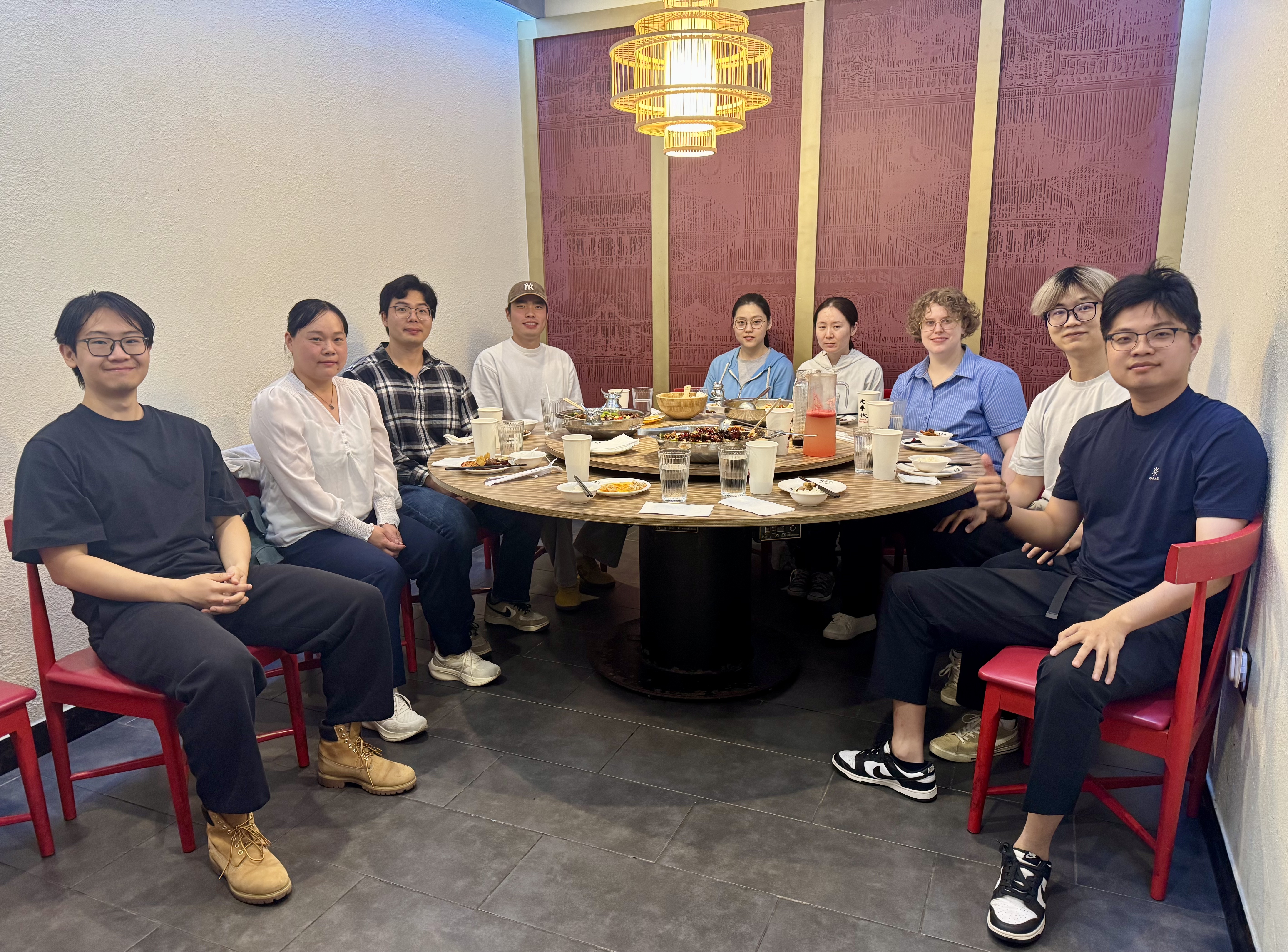
May, 2026 (End-of-Semester Group Lunch)
-
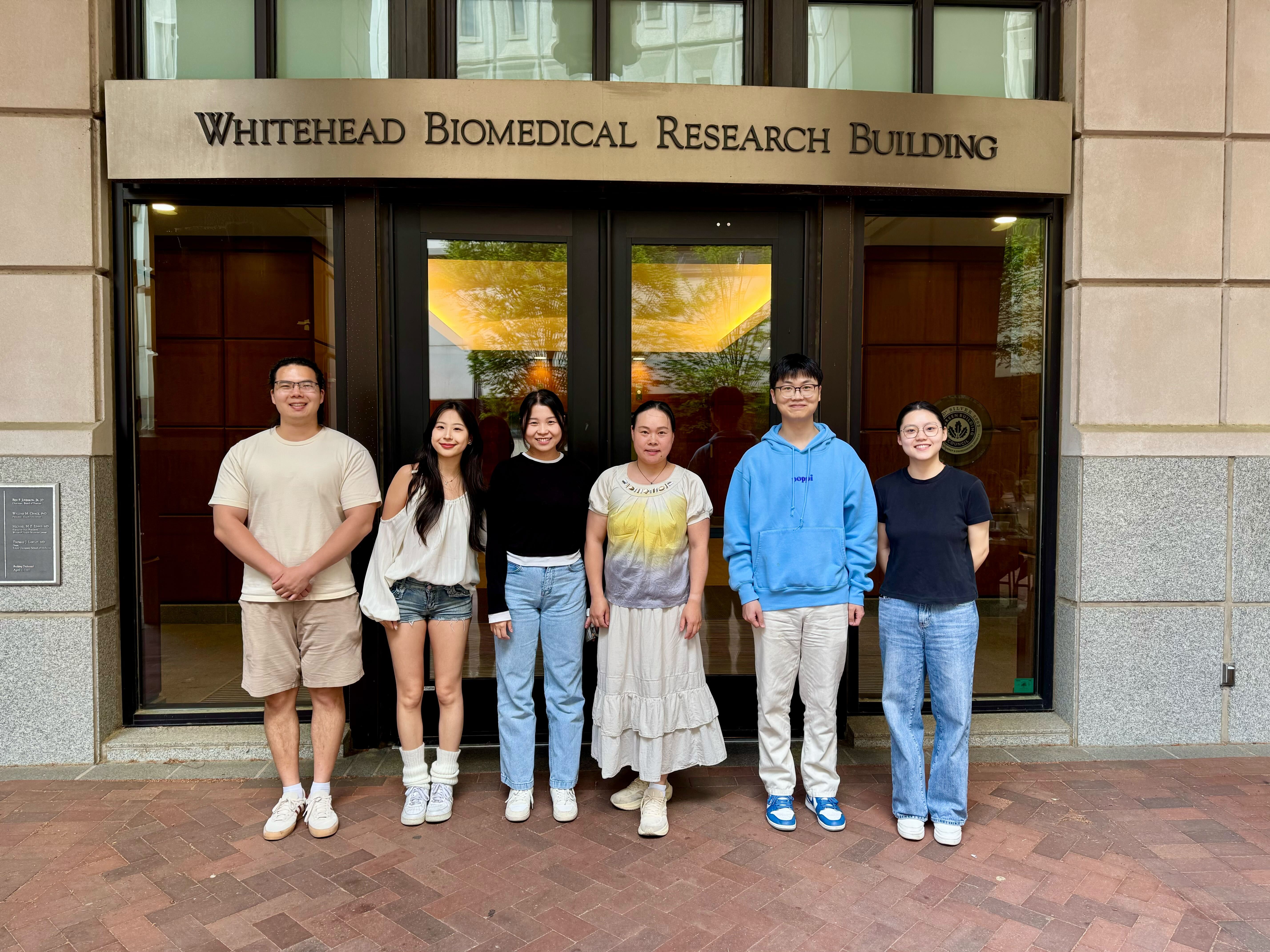
May, 2025 (End-of-Semester Group Lunch)
-
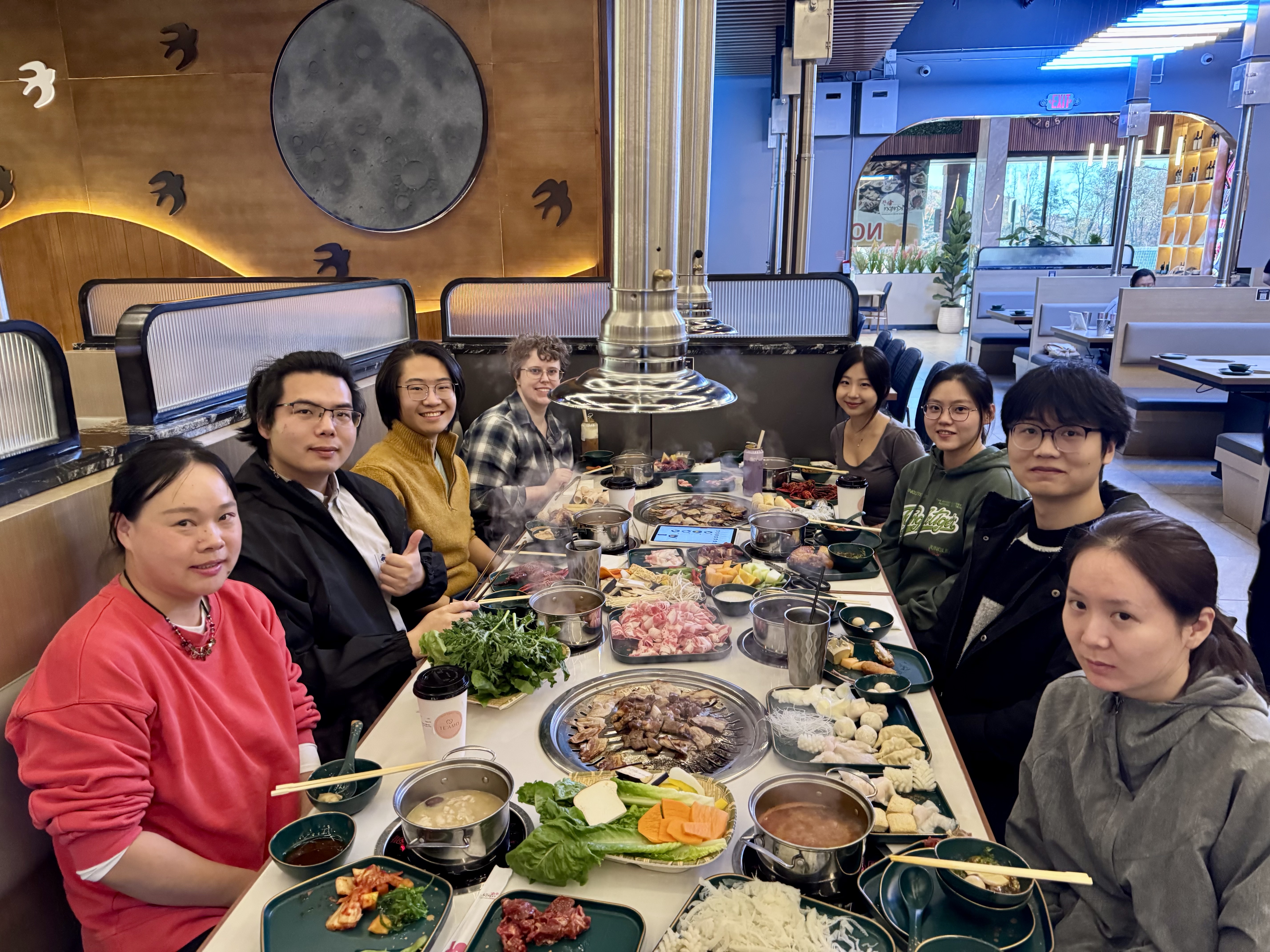
December, 2024 (End-of-Semester Group Lunch)
-
December, 2022 (End-of-Semester Group Lunch)
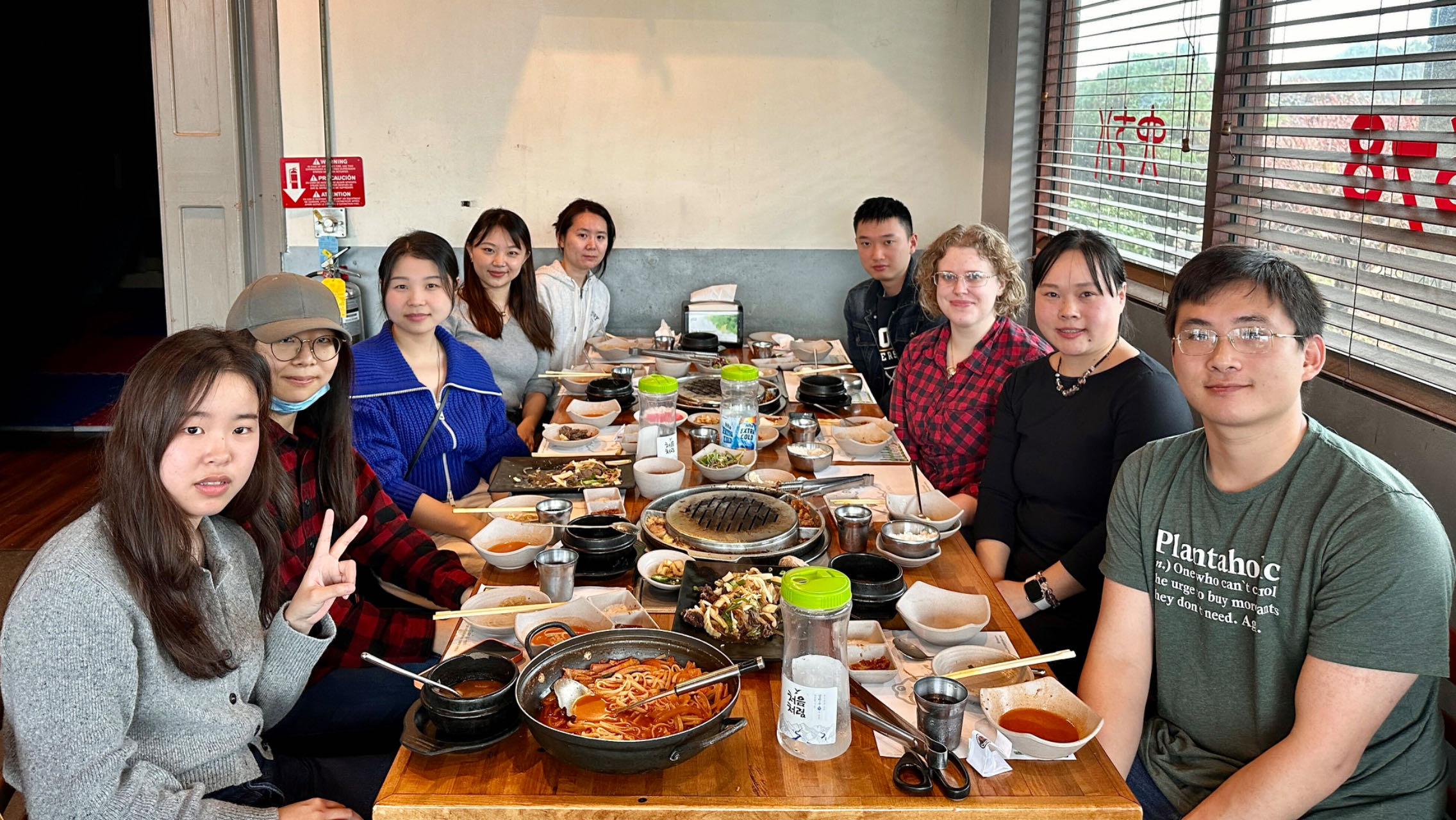
-
May, 2022 (End-of-Semester Group Lunch)
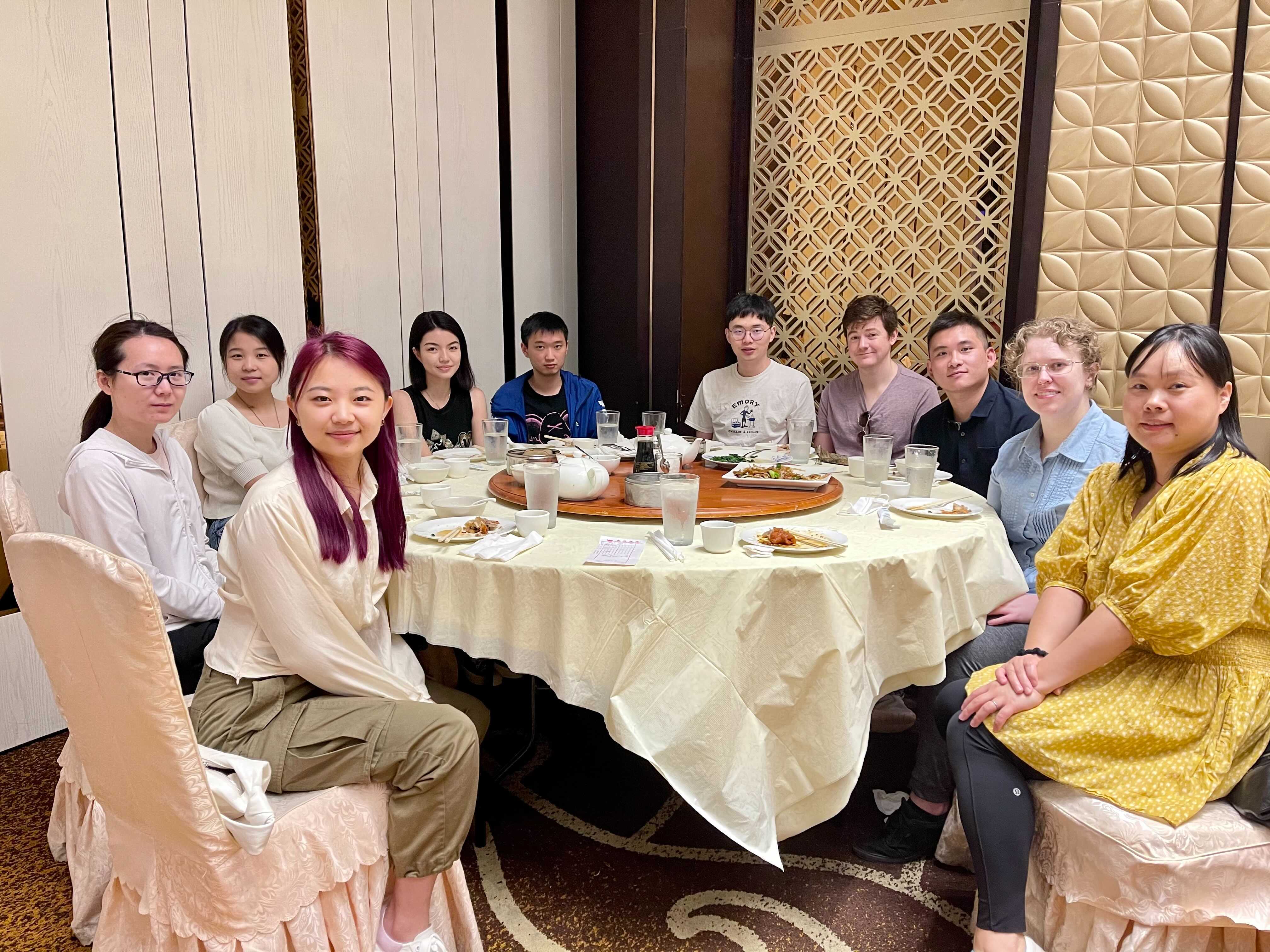
-
July, 2021 (All working remotely through this summer.)
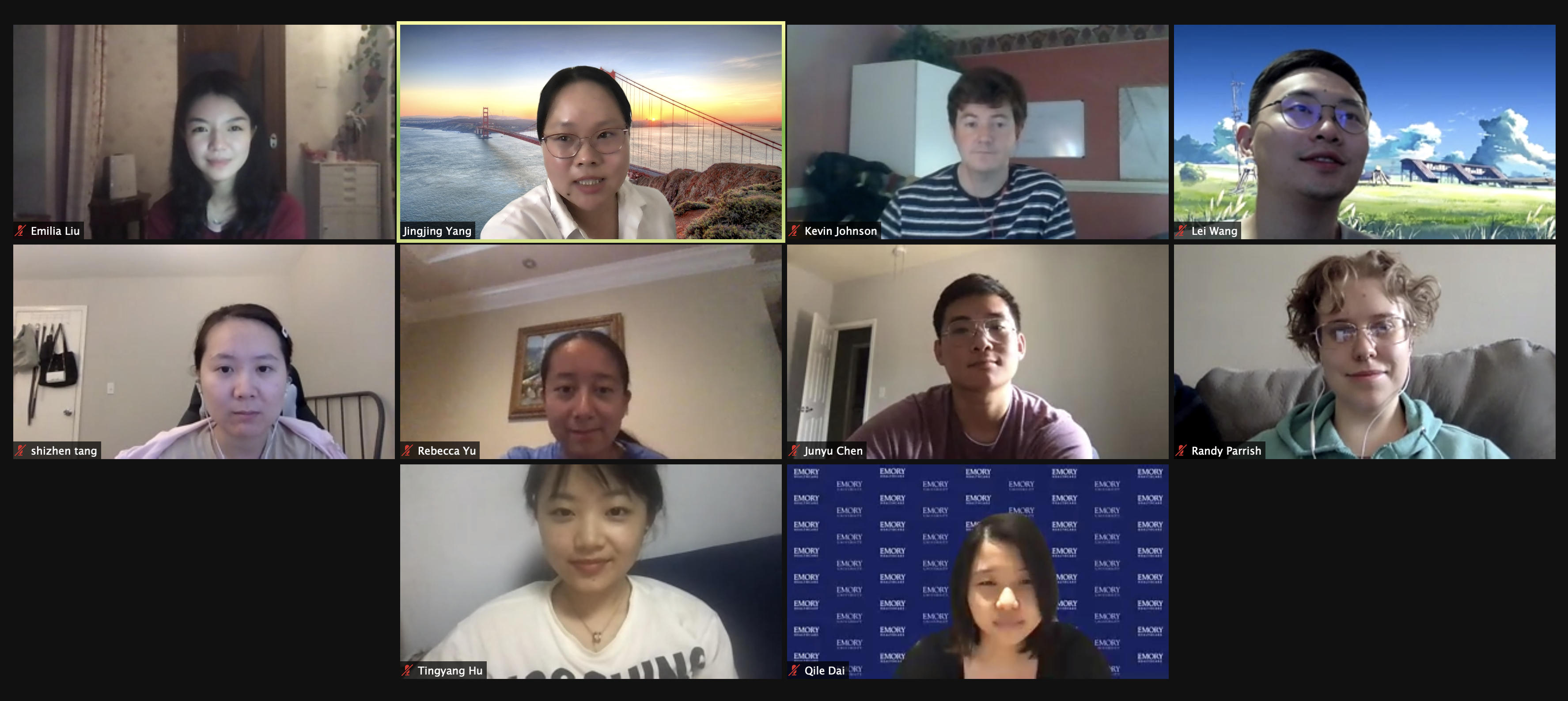
- August, 2020 (All working remotely during this pandemic year.)
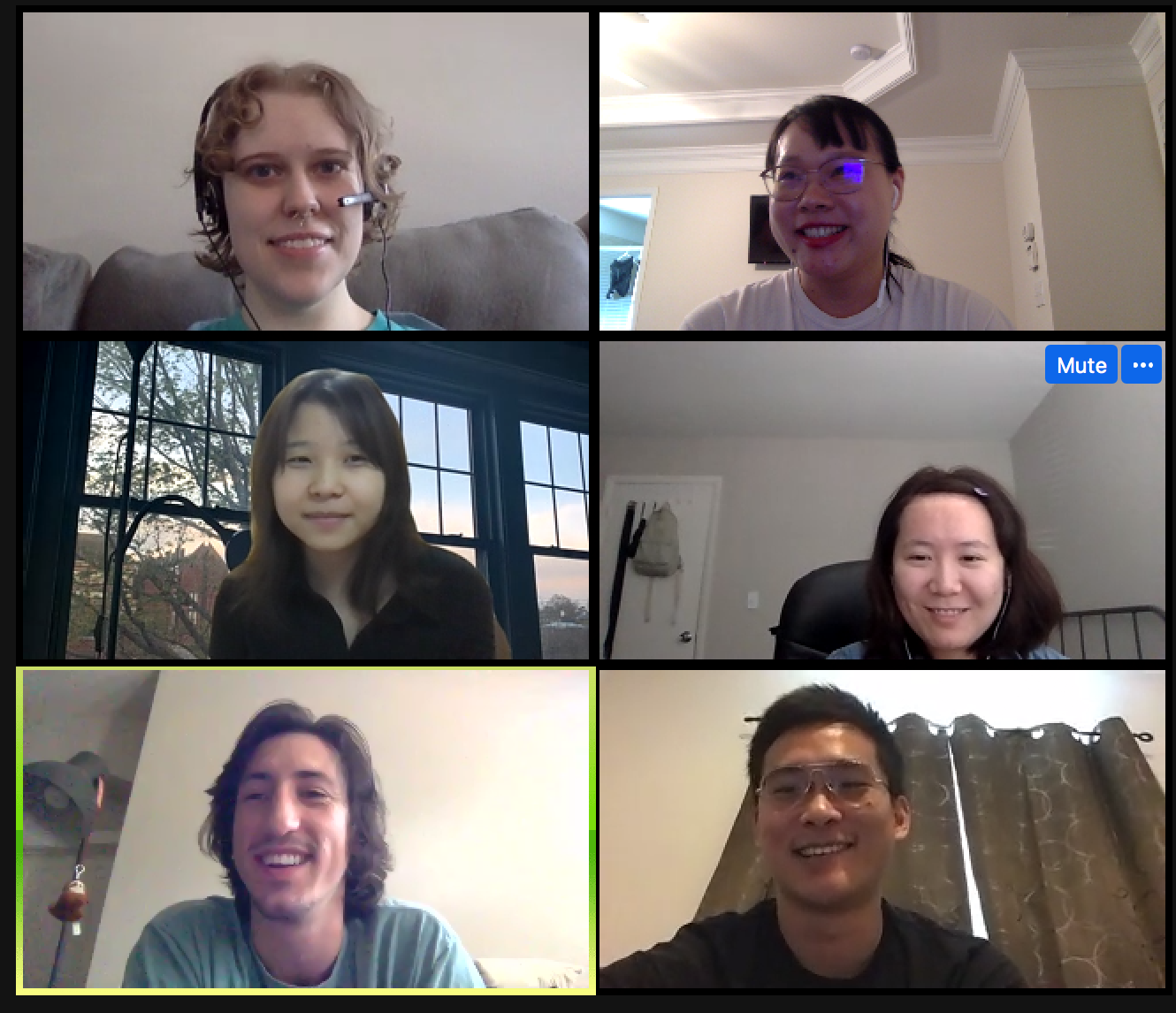
- May, 2019